
Decoding OMB Memorandums M-25-21 and M-25-22

Written by Emily Wolfteich
Senior Industry Analyst
In early 2025, the Office of Management and Budget (OMB) released two critical memorandums—M-25-21 and M-25-22—that signal a major shift in how artificial intelligence (AI) will be deployed across the federal government. These memos replace earlier Biden-era Executive Orders on AI, which the Trump administration rescinded in January. With these changes, the federal AI landscape is entering a new phase characterized by greater agency autonomy, a push for innovation, and challenges around governance and collaboration.
Background
In January 2025, President Donald Trump signed Executive Order, “Removing Barriers to American Leadership in Artificial Intelligence,” which rescinded two Biden-era AI EOs that had played large roles in shaping federal procurement and use of AI. This rescission briefly created a temporary guidance vacuum in federal AI policy.
The administration’s new policy direction emphasizes reducing bureaucratic guardrails to promote innovation and aligns with other policy directives, such as the National Security Presidential Memorandum on the "America First Investment Policy." The overarching aim is to keep both AI innovation and production within U.S. borders, challenging the earlier emphasis on regulatory frameworks and international collaboration. It also aims to streamline procurement through eliminating some regulations and simplifying acquisition policies.
To fill the gap, OMB issued:
- M-25-21: "Accelerating Federal Use of AI through Innovation, Governance, and Public Trust"
- M-25-22: "Driving Efficient Acquisition of Artificial Intelligence in Government"
Together, these documents lay out a roadmap for integrating AI more deeply into federal agency operations.
Broader Implications for U.S. AI Policy
Related Posts

8 AI Trends to Watch in 2026
2026 is the year AI goes from bet to baseline in federal government. Explore 8 key AI trends, from institutionalization and operational reality to cybersecurity risks and DoD’s focus on reliable defense applications.
AI in December (2025)
A look at December’s top AI news in government: The House Task Force report, DHS’s DHSChat launch, and the White House’s 1,700+ federal AI use case inventory.

7 Ways BD & Sales Teams Can Use Federal Personas for Competitive Advantage
Explore 7 strategies for BD and sales teams to use research-based federal personas to sharpen pursuit strategy, tailor messaging, boost credibility, and gain a competitive edge in government contracting.
AI in August (2025)
Key AI news from August 2025: GSA launched USAi.Gov for federal AI adoption, the Pentagon’s Advana platform faced cuts and setbacks, and the Army tested smart glasses for vehicle maintenance. Also, the Department of Labor unveiled a national AI workforce strategy, and Colorado lawmakers began revising the state’s pioneering AI Act.
Deep Dive: Department of Treasury
A look inside Treasury’s 2026-era tech strategy: AI isn’t a standalone budget line — but ~$48.8 M funding for a centralized fraud-detection platform points to growing use of chatbots, generative AI pilots, taxpayer services, fraud monitoring, and data-driven automation under its IT-modernization efforts.

News Bite: AI Slop, Jon Oliver, and (Literally) Fake News
Examines the rise of ‘AI slop’ — cheap, AI-generated content masquerading as real media — and how it’s fueling viral fake news, degrading digital discourse, and undermining trust online.
Deep Dive: Department of Defense
Overview of the Department of Defense’s FY 2026 budget: $961.6 billion total, with heavy investment in AI, unmanned aerial, ground, maritime, and undersea systems — spotlighting a modernization push across all domains.
AI in July (2025)
Federal AI Policy Heats Up in July: The Trump administration unveiled its “America’s AI Action Plan,” prompting a lawsuit over deregulation and a battle with states. Also featuring: a new defense bill with AI provisions and GSA’s $1 ChatGPT deal for federal agencies.

AI in Government: A Question of Trust
Explores how the use of AI by government agencies raises fundamental questions of trust — weighing the benefits of efficiency, fraud detection and streamlined services against serious risks around bias, transparency, accountability, and public confidence.

Insights at a Glance: May 2025
A data driven rundown of the latest federal AI, policy and government‑tech developments from May 2025.
AI in April (2025)
April’s AI news: New White House policies, controversial federal agency automation, military digital overhaul, the TAKE IT DOWN Act, and plans to integrate AI in K-12 education.

Insights at a Glance: March 2025
A data driven rundown of the latest federal AI, policy and government‑tech developments from March 2025.
Policy Dive: AI in the First Week of Trump
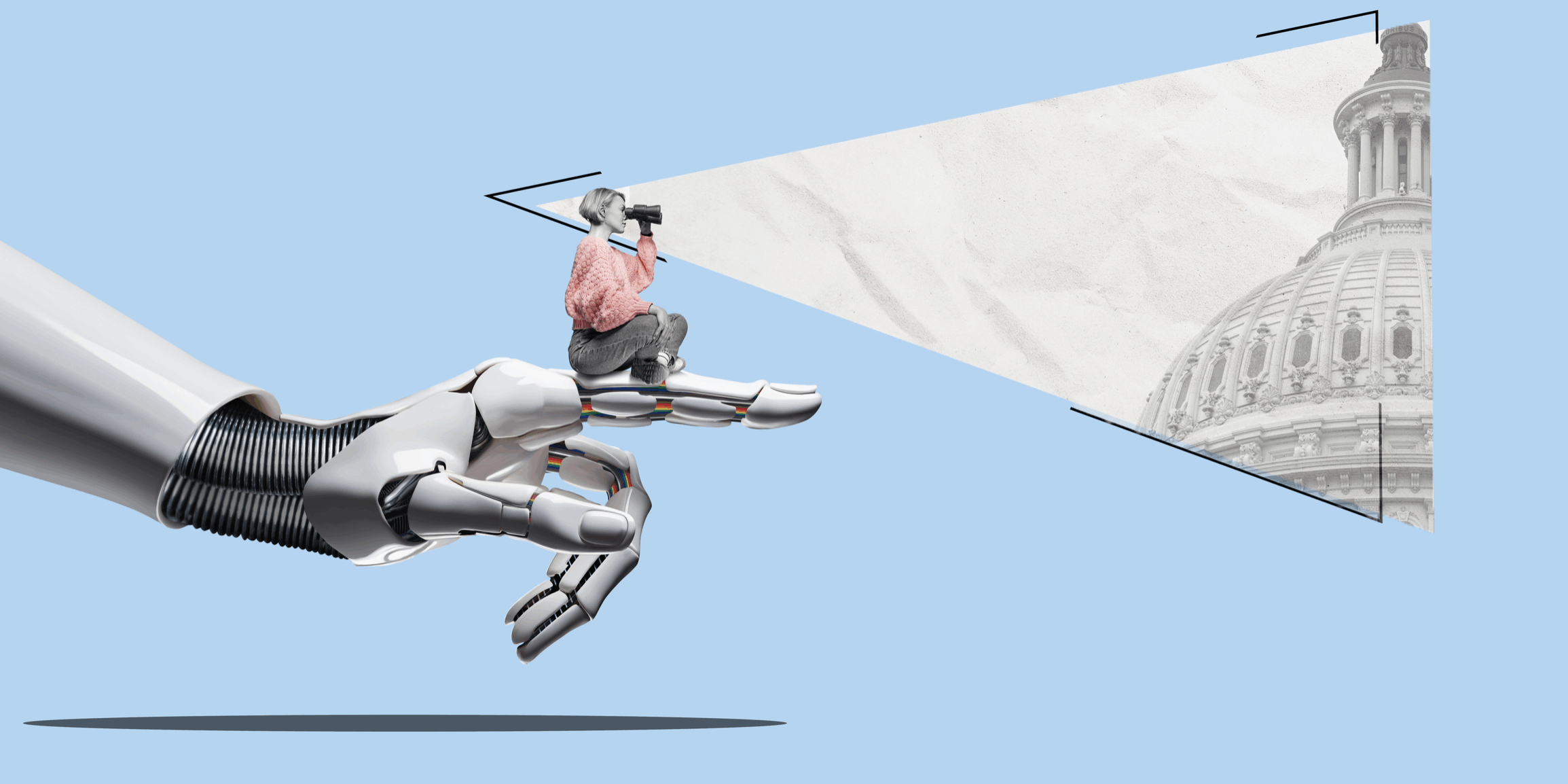
Covers the first‑week AI moves by the new administration — from revoking prior federal AI safeguards to launching a sweeping AI‑domination agenda that prioritizes innovation and global competitiveness over prior guardrails.
AI in January (2025)
Explore the new Trump administration’s deregulatory shift, the massive “Stargate Project” with tech giants, the emergence of a high-performing, cost-effective Chinese AI model (DeepSeek), the launch of OpenAI’s ChatGPT Gov, and key ethical priorities set by the NAIAC.

Artificial Intelligence & the Government: Who’s Driving the Car?
The GAO’s report on the federal government’s adoption of AI is as comprehensive as it can be – but do we like what we see?

How government can experience the Great Stay
As the labor market begins to stabilize, experts predict FY 2024 to be the year of “The Great Stay” among the federal workforce.
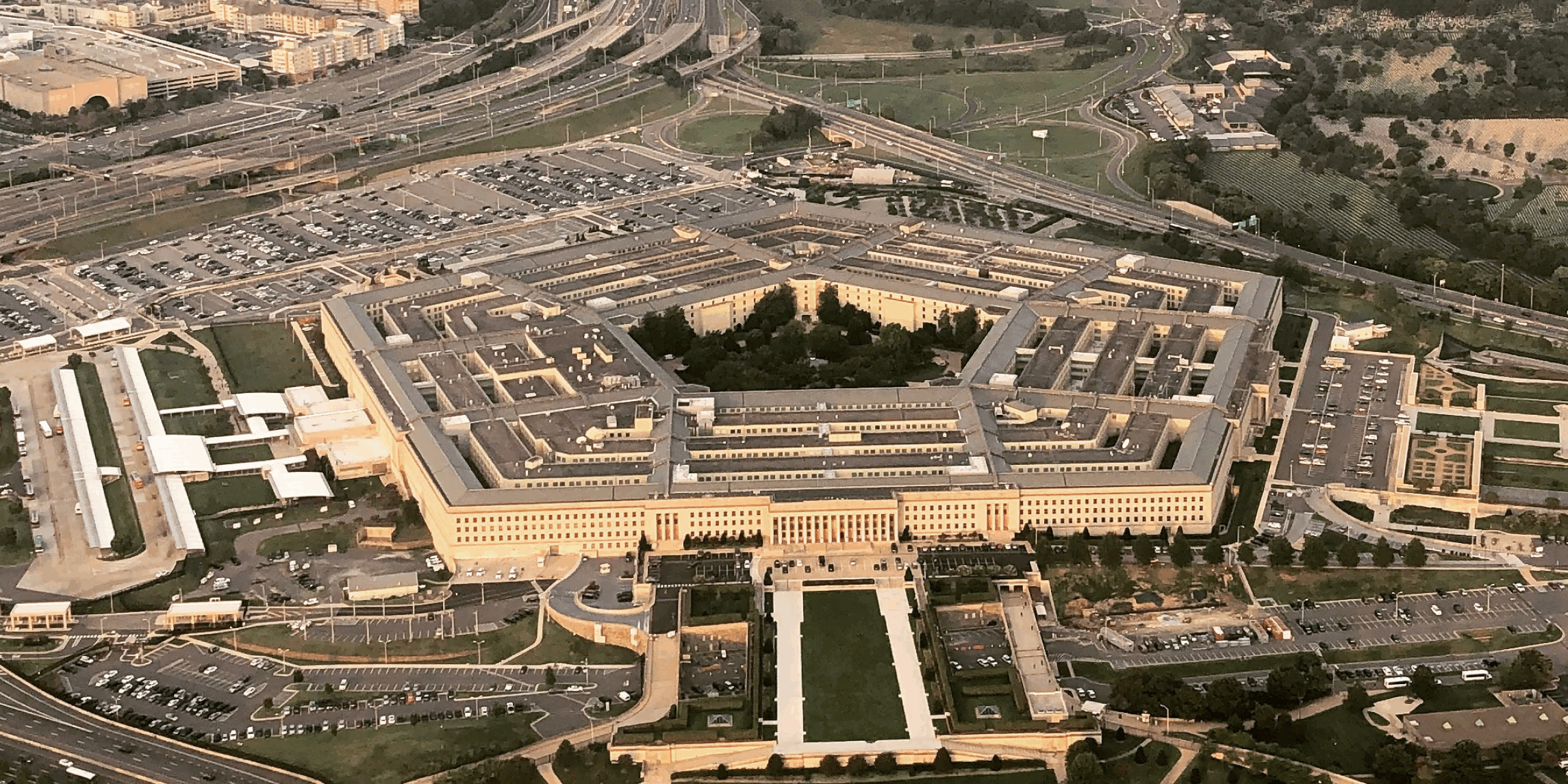
AI & the Pentagon: Cautiously Curious
As AI hype increases across the public and private sectors, organizations are weighing the possibilities (and risks) the tech creates.

AFA’s Air Space & Cyber Conference 2023: Key Takeaways and Insights
Key takeaways from David Hutchins (Government Business Council) and Jon Hemler (Forecast International) on the AFA’s 2023 Air Space & Cyber Conference.

How the Federal Government Can Attract Employees
As the federal workforce ages, attracting young talent is critical. Taking these 10 actions can help attract the next generation.

Top Cybersecurity Trends in the Federal Government and Why They are Important
As cybersecurity tech, frameworks, and standards evolve, there are many trends driving cyber investments within the federal sector in 2023.