
Policy Dive: AI in the First Week of Trump

Written by Emily Wolfteich
Senior Industry Analyst
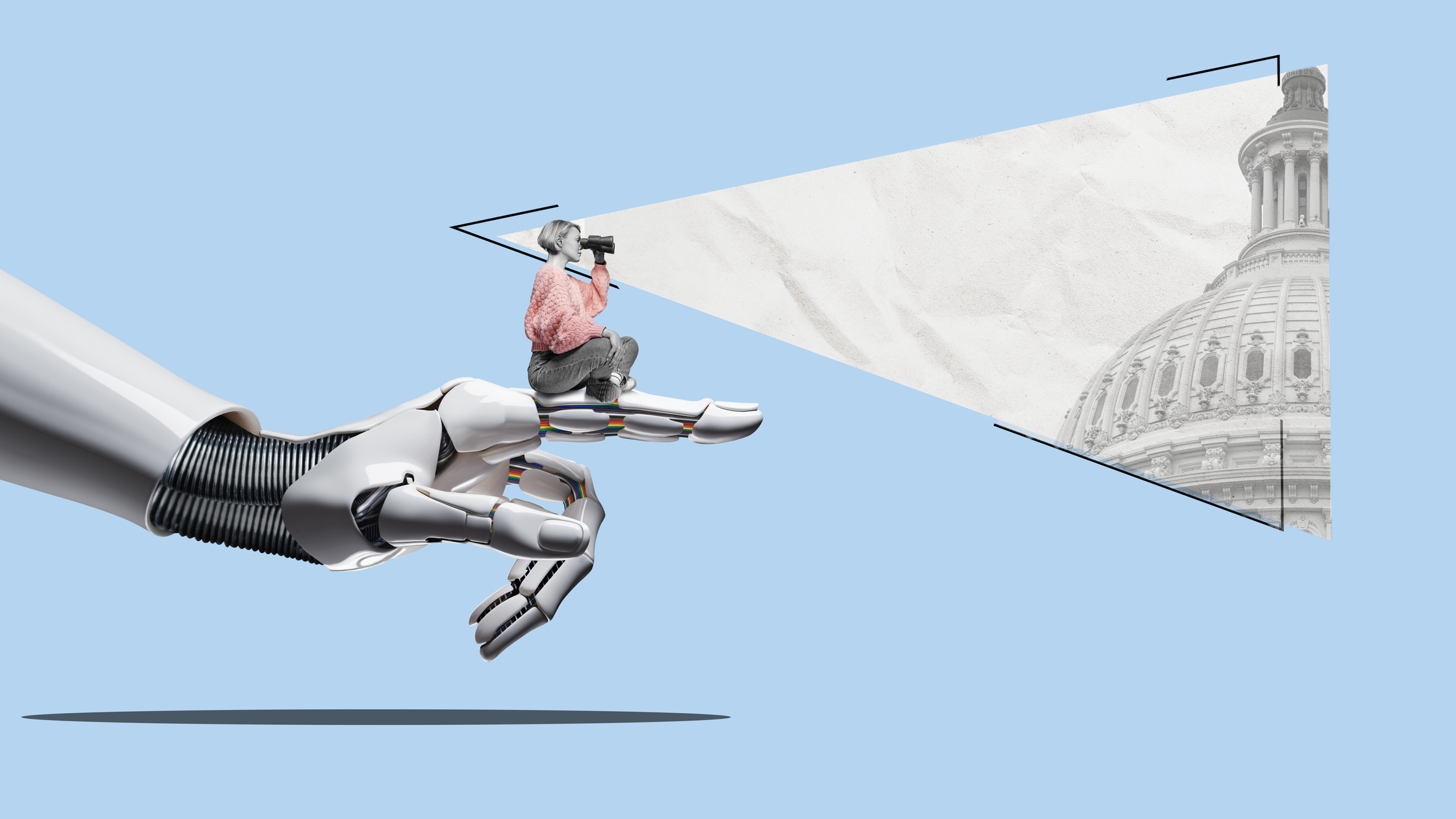
Image source: FotografieLink, istock.com
On Thursday, President Donald Trump signed an executive order (EO) to “remove barriers to American AI innovation” and “take action to enhance America’s AI leadership.” This EO follows Trump’s day-one “Initial Rescissions of Harmful Executive Orders and Actions,” a mandate that revokes 78 Biden-era executive orders. Among these was 2023’s Executive Order 14110, for the Safe, Secure, and Trustworthy Development and Use of Artificial Intelligence.
The rescission of 14110 and subsequent new EO were not unexpected. The administration and Republican party writ large contend that EO 14110 was “dangerous” and promoted “left-wing ideas,” such as setting guardrails around privacy and discrimination and requiring developers to disclose potential security risks to the government. Where does federal guidance stand with the new President, and what does his new Executive Order mean for Americans?
Overall, the EO is vague, focusing on repealing rather than replacing with substantive guidance – that will have to wait several months until the Action Plan and new OMB guidance is released.
The Rundown
Given the EO and other statements made by the new administration, what can we expect going forward?
What’s Next?
New Guidance
The EO directs OMB to revise and reissue rules around AI acquisition and governance within 60 days, and a broader AI Action plan to be completed within six months.
Increased state-level AI regulations
Increased focus on compliance
Without federal regulatory standards for AI use, ensuring that AI systems comply with other laws around data privacy and usage will become even more important, as litigation may become a replacement for regulation.
The Takeaway
Trump’s view of AI development has changed even from his first term, when his administration wrote that AI development must happen “while maintaining the safety, security, civil liberties, privacy, and confidentiality protections we all expect.” His new Executive Order, combined with virulent takedowns of any indication of equity or anti-bias efforts across the government, indicates a preference for policies that will prioritize speed over safety, acquiesce to the desires of Big Tech at the expense of the environment and civil rights, and strip the government of much-needed guidance in how to implement AI safely. For the moment, the EO appears to be more of a blunt instrument than a thoughtful progression, creating more chaos than opportunity. It remains to be seen how the AI Action Plan and OMB guidance will address this vacuum of leadership.
Sir Demis Hassabis, the Nobel-Prize winning chief of Google DeepMind, warned in an interview about full-speed, guardrail-free AI development, saying “There’s much more at stake here than just companies or products [...] it’s the future of humanity, the human condition and where we want to go as a society.” Without measures in place, AI models have the potential to codify racism, sexism and homophobia, and income inequality, exacerbating existing cultural, class, and global divisions. States will likely step up to implement their own guidelines, resulting in an American patchwork of regulations that will create concerns (and lawsuits) around data usage and privacy, civil rights, and discrimination across state lines.
To read additional thought leadership from Emily, connect with her on LinkedIn.
Related Posts

8 AI Trends to Watch in 2026
2026 is the year AI goes from bet to baseline in federal government. Explore 8 key AI trends, from institutionalization and operational reality to cybersecurity risks and DoD’s focus on reliable defense applications.
AI in December (2025)
A look at December’s top AI news in government: The House Task Force report, DHS’s DHSChat launch, and the White House’s 1,700+ federal AI use case inventory.

7 Ways BD & Sales Teams Can Use Federal Personas for Competitive Advantage
Explore 7 strategies for BD and sales teams to use research-based federal personas to sharpen pursuit strategy, tailor messaging, boost credibility, and gain a competitive edge in government contracting.
AI in August (2025)
Key AI news from August 2025: GSA launched USAi.Gov for federal AI adoption, the Pentagon’s Advana platform faced cuts and setbacks, and the Army tested smart glasses for vehicle maintenance. Also, the Department of Labor unveiled a national AI workforce strategy, and Colorado lawmakers began revising the state’s pioneering AI Act.
Deep Dive: Department of Treasury
A look inside Treasury’s 2026-era tech strategy: AI isn’t a standalone budget line — but ~$48.8 M funding for a centralized fraud-detection platform points to growing use of chatbots, generative AI pilots, taxpayer services, fraud monitoring, and data-driven automation under its IT-modernization efforts.

Decoding OMB Memorandums M-25-21 and M-25-22
Explains Office of Management and Budget (OMB) M‑25‑21 and M‑25‑22 — new federal‑AI directives that replace prior guidance, empower agencies to adopt AI faster, and streamline procurement, while aiming to balance innovation, governance and public trust.

News Bite: AI Slop, Jon Oliver, and (Literally) Fake News
Examines the rise of ‘AI slop’ — cheap, AI-generated content masquerading as real media — and how it’s fueling viral fake news, degrading digital discourse, and undermining trust online.

Deep Dive: Department of Defense
Overview of the Department of Defense’s FY 2026 budget: $961.6 billion total, with heavy investment in AI, unmanned aerial, ground, maritime, and undersea systems — spotlighting a modernization push across all domains.
AI in July (2025)
Federal AI Policy Heats Up in July: The Trump administration unveiled its “America’s AI Action Plan,” prompting a lawsuit over deregulation and a battle with states. Also featuring: a new defense bill with AI provisions and GSA’s $1 ChatGPT deal for federal agencies.

AI in Government: A Question of Trust
Explores how the use of AI by government agencies raises fundamental questions of trust — weighing the benefits of efficiency, fraud detection and streamlined services against serious risks around bias, transparency, accountability, and public confidence.

Insights at a Glance: May 2025
A data driven rundown of the latest federal AI, policy and government‑tech developments from May 2025.
AI in April (2025)
April’s AI news: New White House policies, controversial federal agency automation, military digital overhaul, the TAKE IT DOWN Act, and plans to integrate AI in K-12 education.

Insights at a Glance: March 2025
A data driven rundown of the latest federal AI, policy and government‑tech developments from March 2025.
AI in January (2025)
Explore the new Trump administration’s deregulatory shift, the massive “Stargate Project” with tech giants, the emergence of a high-performing, cost-effective Chinese AI model (DeepSeek), the launch of OpenAI’s ChatGPT Gov, and key ethical priorities set by the NAIAC.

Artificial Intelligence & the Government: Who’s Driving the Car?
The GAO’s report on the federal government’s adoption of AI is as comprehensive as it can be – but do we like what we see?

How government can experience the Great Stay
As the labor market begins to stabilize, experts predict FY 2024 to be the year of “The Great Stay” among the federal workforce.
AI & the Pentagon: Cautiously Curious
As AI hype increases across the public and private sectors, organizations are weighing the possibilities (and risks) the tech creates.

AFA’s Air Space & Cyber Conference 2023: Key Takeaways and Insights
Key takeaways from David Hutchins (Government Business Council) and Jon Hemler (Forecast International) on the AFA’s 2023 Air Space & Cyber Conference.

How the Federal Government Can Attract Employees
As the federal workforce ages, attracting young talent is critical. Taking these 10 actions can help attract the next generation.

Top Cybersecurity Trends in the Federal Government and Why They are Important
As cybersecurity tech, frameworks, and standards evolve, there are many trends driving cyber investments within the federal sector in 2023.